Choosing reliable roofing suppliers requires more than comparing prices or reading polished catalogues. This guide examines China’s top 10 flat roof materials manufacturers through practical criteria, including product range, manufacturing experience, quality systems, technical support, and export performance. The selected companies may offer membranes, insulation boards, coatings, drainage components, metal systems, and other flat roof materials for commercial, industrial, and residential projects.
A strong manufacturer should explain how its materials perform under sunlight, heavy rain, temperature changes, and regular foot traffic. Product details matter. For example, a contractor may need a reinforced waterproof membrane for a warehouse roof, or rigid insulation boards that fit tightly around pipes and drains. Certifications are useful, but they should not replace independent testing, project references, and clear installation guidance. Experience on real construction sites often reveals more than a brochure.
This ranking is a practical starting point, not an absolute verdict. A perfect list does not exist. Supplier capabilities, standards, lead times, and product formulations can change over time. Buyers should verify current certificates, factory capacity, warranty terms, and after-sales support before signing a contract. Local climate and building requirements also deserve careful attention. A material that performs well in a dry region may require different protection in coastal or freezing conditions. We have aimed for a balanced review, though some information may need further confirmation. That limitation matters. Reliable decisions come from comparing documented evidence with the specific needs of each roof.
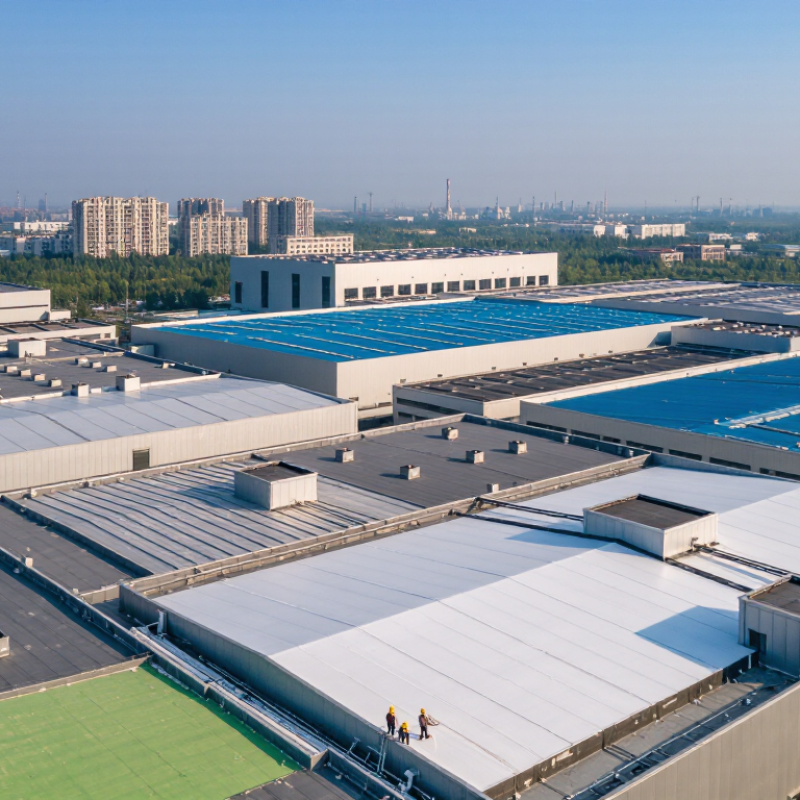
A flat roof material is more than a waterproof surface.
It is a layered system that protects a building from rain, heat, wind, and daily movement. Common choices include EPDM rubber, TPO and PVC membranes, modified bitumen, built-up roofing, and coated metal panels. Each material has different strengths, installation needs, and service expectations.
The right choice depends on climate, roof size, drainage, insulation, and maintenance access.
In hot regions, reflective membranes can reduce surface heat and cooling demand. In colder areas, flexible materials must tolerate repeated expansion and contraction. A roof with slow drainage needs strong seams and careful detailing around drains, vents, and parapets. One overlooked edge can allow water beneath the membrane.
Manufacturing quality matters, but installation quality matters just as much. Experienced inspectors check membrane thickness, weld consistency, adhesive coverage, and flashing details. They also review test records and storage conditions before installation.
No material is perfect. A durable membrane can still fail when workers rush the seams or ignore trapped moisture.
I have found that simple inspection notes often prevent expensive repairs, although inspections are sometimes treated as optional.
Regular checks after storms can reveal loose flashing, ponding water, or small punctures before they spread.

China’s flat roof materials industry is organized through specialized production networks rather than one uniform sector. The top ten manufacturers usually focus on one or two product groups, such as modified bitumen membranes, PVC sheets, TPO membranes, insulation boards, or protective coatings. Raw material suppliers support these factories with polymers, fiberglass, minerals, and chemical additives. Regional clusters also reduce transport costs and improve access to skilled workers.
Manufacturers commonly serve domestic contractors, distributors, and overseas project buyers. Larger factories often maintain testing laboratories, automated coating lines, and export departments. Smaller producers may offer flexible sizes and private-label production, but their quality systems can vary. From factory visits, buyers should examine storage conditions, production records, and batch traceability. A low quoted price can hide weaker reinforcement or shorter service life. Rankings can change quickly, too. Sales volume does not always equal technical reliability.
Tips: Request recent test reports, installation instructions, and climate-specific performance data. Check whether the material suits ponding water, strong sunlight, freezing temperatures, and heavy maintenance traffic. Ask for sample rolls before signing a large order. Compare warranty terms carefully, because coverage may depend on installation quality. Inspect packaging for crushed edges, moisture damage, and unclear labeling. A professional supplier should answer technical questions clearly, not only discuss price.
Evaluating China’s top 10 flat roof materials manufacturers requires more than comparing online catalogs. I would inspect production lines, laboratory records, and recent project evidence. A reliable manufacturer should explain membrane thickness, tensile strength, thermal movement, and expected service conditions clearly. Factory samples matter. Uneven coating, brittle edges, or unclear labeling can reveal weak quality control.
Compliance documents should be verified, not simply accepted as colorful certificates. Look for test reports from recognized laboratories, traceable batch numbers, and standards relevant to the destination market. Experienced technical teams can recommend suitable systems for concrete decks, insulation layers, drainage slopes, and harsh climates. Their advice should include installation limits and maintenance needs. Vague answers are a warning.
Cost deserves careful review. Compare material yield, accessories, shipping protection, labor requirements, and warranty terms instead of using price alone. Ask for references from similar roof sizes and weather conditions. A manufacturer that shares failure cases may appear less polished, yet it may demonstrate stronger professional honesty. I would also assess response time, factory capacity, environmental controls, and backup suppliers. My scoring model is not perfect. Local installers may value different details. Still, documented performance, practical support, and consistent production should carry more weight than impressive advertising or unusually low quotations.
Profiles of China’s Top 10 Flat Roof Materials Manufacturers
China’s top ten flat roof materials manufacturers represent different technical strengths. One focuses on PVC membranes for commercial warehouses. Another produces TPO sheets designed for reflective, energy-conscious roofs. A third specializes in EPDM systems for flexible movement and long service. Modified bitumen remains important, especially for projects needing layered protection.
Other leading manufacturers develop liquid-applied coatings, mineral wool insulation, polyisocyanurate boards, and pre-fabricated metal roof panels. One supplier combines insulation with waterproof membranes, reducing installation steps. Another concentrates on drainage accessories, such as outlets, channels, and edge details. Two manufacturers serve overseas contractors with customized thicknesses, packaging, and technical drawings. Their real value depends on factory control, not attractive brochures. Clean production lines, batch records, tensile testing, and documented aging tests offer stronger evidence. Still, product data can be incomplete. Buyers should question unclear claims.
Tips: Compare the complete roof assembly, not one material alone. Check climate resistance, seam methods, fire performance, and repair procedures. Request recent test reports and installation references. A low initial price may hide difficult detailing or frequent maintenance. Site conditions matter more than a perfect catalogue.
| No. | Anonymous Manufacturer Profile | Main Flat Roof Materials | Typical Product Thickness | Typical Roll or Sheet Width | Reinforcement or Construction | Relevant Standards | Typical Service Life | Common Flat Roof Applications |
|---|---|---|---|---|---|---|---|---|
| 01 | Profile A | PVC single-ply membrane | 1.2–2.0 mm | 1.5–2.0 m | Polyester scrim or non-reinforced layer | GB/T 12952; EN 13956 | 20–30 years with correct installation | Commercial roofs, warehouses, factories, and podium roofs |
| 02 | Profile B | TPO single-ply membrane | 1.2–2.0 mm | 1.5–2.0 m | Polyester reinforcement; hot-air welded seams | GB/T 27789; EN 13956 | 20–30 years with regular maintenance | Energy-efficient commercial and industrial roof systems |
| 03 | Profile C | EPDM rubber membrane | 1.2–2.0 mm | 3.0–6.0 m; larger sheets available | Unreinforced or polyester-reinforced rubber | EN 13956; ASTM D4637 | 30–50 years depending on exposure | Large low-slope roofs, green roofs, and waterproofing renovations |
| 04 | Profile D | SBS-modified bitumen membrane | 3.0–5.0 mm | 1.0 m standard roll width | Fiberglass or polyester carrier; torch-applied or self-adhered | GB 18242; EN 13707 | 15–30 years based on system design | Residential, commercial, and refurbishment roof assemblies |
| 05 | Profile E | APP-modified bitumen membrane | 3.0–5.0 mm | 1.0 m standard roll width | Polyester or fiberglass reinforcement; heat-welded seams | GB 18243; EN 13707 | 15–25 years under suitable climate conditions | Warm-climate roofs, exposed decks, and concrete roof slabs |
| 06 | Profile F | Polyurethane waterproof coating | 1.5–3.0 mm cured film | Liquid-applied; seamless coverage | Single-component or two-component elastomeric coating | GB/T 19250; EN 1504-2 | 10–20 years depending on UV protection | Complex roof geometries, details, drains, and repair projects |
| 07 | Profile G | Acrylic elastomeric roof coating | 0.8–1.5 mm dry film | Liquid-applied; seamless coverage | Water-based polymer coating with reinforcing fabric where required | ASTM D6083; EN 1062-1 | 8–15 years with periodic recoating | Metal roofs, concrete decks, and reflective roof restoration |
| 08 | Profile H | Self-adhered bituminous membrane | 1.5–3.0 mm | 1.0 m standard roll width | Modified bitumen with release film and polyester reinforcement | ASTM D1970; EN 13969 | 15–25 years when protected from prolonged exposure | Residential roofs, detail work, and projects without open-flame application |
| 09 | Profile I | Metal roofing sheets and standing-seam panels | 0.45–0.90 mm steel; 0.7–1.0 mm aluminum | Up to approximately 1.2 m effective cover width | Pre-painted or metallic-coated steel; concealed-fixing seams | GB/T 12754; EN 508-1 | 25–50 years depending on coating and environment | Industrial buildings, logistics centers, and lightweight roof structures |
| 10 | Profile J | Roof insulation panels with waterproof facing | 40–200 mm insulation core | 1.0–1.2 m panel width | PIR, PUR, EPS, or mineral wool core with metal or membrane facing | GB/T 23932; EN 14509 | 25–40 years depending on core and protective layers | Insulated factories, cold stores, modular buildings, and energy-saving retrofits |
Note: Technical ranges represent commonly specified values for the listed flat roof material categories. Actual performance, dimensions, warranty terms, and service life depend on product formulation, installation quality, local climate, exposure, maintenance, and the complete roof system design.
Choosing among China’s top 10 flat roof materials manufacturers requires more than comparing quoted prices. Start with your roof design, climate, insulation system, and installation method. A suitable supplier should explain whether TPO, PVC, EPDM, modified bitumen, or metal systems fit your project.
Ask for technical data sheets, recent laboratory reports, production photographs, and samples from the same batch. Check tensile strength, weather resistance, thickness tolerance, welding performance, and expected service conditions. Request references from projects with similar roof sizes and climates. A serious manufacturer should answer detailed questions without avoiding difficult specifications.
Visit the factory when possible. Inspect raw material storage, mixing areas, testing equipment, and packaging methods. A clean showroom proves little. Production control matters more. Confirm whether the factory performs incoming material checks and records final inspections. Review its export experience, communication process, warranty terms, and ability to provide installation guidance. Samples may look excellent, yet container packaging can cause damage or contamination. Ask for loading photos and a written protection plan. Do not rely on certificates alone; verify their scope and validity. Price often reveals something, but not everything. A lower offer may exclude accessories, testing, or technical support. Leave room for questions, corrections, and a second sample review before signing.
The chart compares the typical service-life midpoint of widely used flat-roof materials. Actual performance depends on climate, UV exposure, drainage design, installation quality, maintenance, and warranty terms. When choosing a Chinese manufacturer, verify tested performance, production consistency, technical support, and compliance with the requirements of your project location.