China Best Tesla Solar Panels Review Is It Worth It?
A tesla solar panels review for readers in China must begin with one practical question: can the system actually be purchased and supported in their area? Tesla’s solar offerings and service coverage vary by market, so confirm current availability through official regional channels before comparing prices. A product page alone is not enough. Ask who supplies the equipment, who installs it, and which company handles warranty claims.
This review will examine panel performance, system design, monitoring, installation requirements, and long-term support. It will also consider how roof direction, shade, local electricity rates, and household consumption affect potential savings. A sunny roof can still produce disappointing results if nearby buildings cast shadows during peak hours. Small details matter.
There is no single answer for every home. An advertised efficiency figure does not guarantee lower bills, and projected savings depend on real usage and local tariffs. Request a site assessment and a written estimate that separates panels, inverter, installation, and any battery costs. Check the warranty terms carefully, including who provides service if an installer changes or closes. This is easy to overlook.
The article will distinguish verified product information from assumptions and discuss questions buyers should ask before committing. Where reliable China-specific pricing or service details are unavailable, that uncertainty should be stated plainly. A fair verdict needs more than brand recognition. It needs evidence that the system can be obtained, installed, and maintained where the buyer lives.
Tesla Solar Panels: Product Types and How They Work
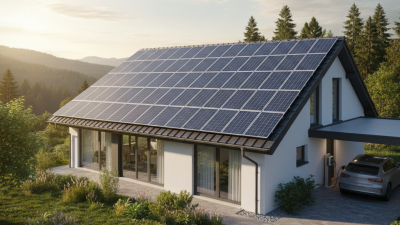
Residential solar products usually take two forms: framed rooftop modules and solar roof tiles. Framed modules use silicon cells to convert sunlight into direct-current electricity. An inverter changes it into alternating current for household circuits. A battery can store some excess power for later use. Solar tiles perform the same basic job, but integrate into the roof surface. Looks seamless. They can be harder to assess because usable output depends on tile design, roof area, and shading.
Real-world production is lower than a panel’s rated output. The National Renewable Energy Laboratory’s PVWatts calculator uses a default 14% system-loss assumption, including effects such as wiring, soiling, and mismatch. That is a modeling default, not a prediction for every home. NREL’s review of photovoltaic studies reported a median module degradation rate of about 0.5% per year. Conditions vary. Roof direction, tree shade, heat, and local weather all matter, so a site-specific estimate is more useful than a product’s headline rating. I would also check whether the quote explains its loss assumptions; that detail is easy to overlook.
Availability and Installation Options in China
Availability can be uneven in China. Imported solar equipment may not be stocked locally, and model choices can vary by city. Before paying a deposit, ask for the exact panel and inverter model, written warranty terms, and a local service contact. A low price means little if replacement parts take weeks to arrive. Check this carefully.
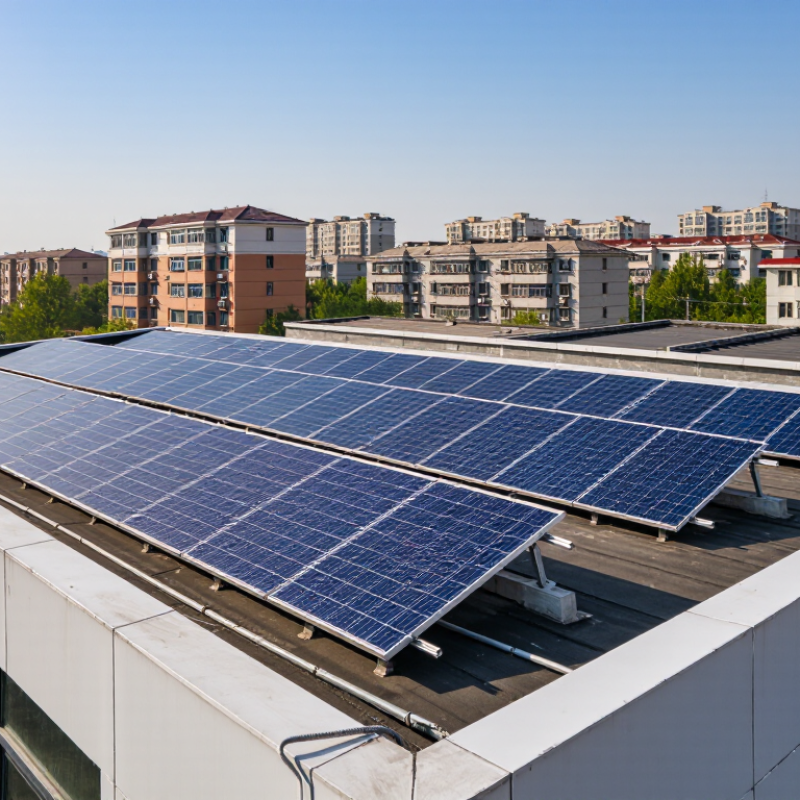
Installation depends more on the property than the panel. A detached home with a sound, unshaded roof is usually the simplest case. In an apartment, shared-roof access may require approval from the property manager or owners’ committee. Balcony systems are not automatically practical; space, mounting rules, and safe wiring all matter. Measure the usable area, then note shade from nearby towers at different times of day.
Ask installers to inspect the roof structure, estimate annual output using local weather data, and explain the grid-connection process for your area. Procedures can differ between cities and utilities. Get the scope in writing, including mounting hardware, electrical protection, monitoring, and after-sales visits. I would not rely on a verbal promise. Even a careful estimate can miss winter shade or roof repairs, so leave room for uncertainty.
China’s Solar PV Market: Cumulative Installed Capacity
China’s cumulative solar photovoltaic capacity grew substantially between 2020 and 2024. This national market data provides context for solar adoption, but does not confirm the availability of any specific panel product. Product availability and installation options vary by location, building type, local grid requirements, and installer.
Source: China National Energy Administration annual statistics. Figures are year-end cumulative capacity, rounded to the nearest gigawatt.
Costs, Incentives, and Long-Term Savings
The real cost of a home solar system depends on more than the panels. Roof condition, electrical upgrades, local labor, and battery storage can change a quote substantially. Ask for an itemized estimate showing equipment, installation, permits, and expected annual production. A shaded roof may generate less than a sales estimate suggests. Small details matter.
Incentives can reduce the upfront price, but eligibility and availability vary by location and year. Confirm current programs with official government or utility sources before including them in your budget. Then compare the net cost with realistic bill savings, not the most optimistic forecast. Utility rates, export credits, and household usage all affect the payback period. A simple spreadsheet can help: list the net installation cost, expected yearly savings, and likely maintenance expenses.
Long-term savings are possible, but they are not guaranteed. Panels gradually produce less electricity, and an inverter or battery may need replacement during the system’s life. Ask how performance estimates account for shade, weather, and equipment aging. I would also leave room in the budget for surprises; home projects rarely follow a perfect forecast. If the numbers only work under ideal assumptions, reconsider the system size or financing terms.
China Residential Solar Panels: Costs, Incentives, and Long-Term Savings
The figures below are illustrative estimates for a 5 kW residential rooftop system, not a site-specific quote. Actual costs, electricity prices, generation, and export compensation vary by province, roof conditions, installer, and local policy.
| Factor |
Illustrative Estimate |
What It Means for Homeowners |
| Installed system size |
5 kW |
A common reference size for comparing residential rooftop system costs and output. |
| Indicative installed cost |
Approximately ¥15,000–¥25,000 |
Equivalent to roughly ¥3–¥5 per watt in this example. Confirm whether a quote includes design, installation, grid connection, and any required electrical work. |
| Estimated annual generation |
Approximately 5,000–7,000 kWh |
Actual output depends on location, roof direction and tilt, shading, weather, and system design. |
| Residential electricity price |
Varies by province and household usage |
The value of each self-consumed kilowatt-hour depends on the applicable local tariff and, where relevant, its usage tiers. |
| Incentives and export compensation |
No single nationwide residential rate applies to every project |
New projects should not assume a universal national subsidy. Check current provincial and local policies, grid-connection requirements, and the compensation terms offered for exported electricity. |
| Typical operating life used for planning |
About 25 years as a planning assumption |
Long-term output is affected by gradual performance decline, equipment condition, maintenance, and possible inverter replacement. |
Illustrative Savings Scenarios for a 5 kW System
| Scenario |
System Cost |
Annual Generation |
Self-Consumed Share |
Estimated First-Year Bill Savings and Export Revenue |
Simple Payback |
| Conservative |
¥25,000 |
5,000 kWh |
40% |
About ¥1,400 per year |
About 18 years |
| Illustrative baseline |
¥20,000 |
6,000 kWh |
60% |
About ¥2,520 per year |
About 8 years |
| Favorable |
¥15,000 |
7,000 kWh |
80% |
About ¥3,850 per year |
About 4 years |
Scenario calculations use illustrative assumptions only: self-consumed electricity valued at ¥0.40, ¥0.50, or ¥0.60 per kWh, respectively, and exported electricity valued at ¥0.20, ¥0.30, or ¥0.35 per kWh. These are not quoted national tariffs or guaranteed rates. Simple payback is system cost divided by estimated first-year value; it excludes financing, maintenance, degradation, taxes, and future tariff changes.
Performance, Durability, and Key Limitations
A China-sourced residential solar panel should be judged by measured output, not a headline efficiency figure alone. In practice, daily production depends on roof direction, local weather, shade, and system design. A clear, cool morning may produce less energy than expected if a nearby tree casts a narrow shadow across one panel. That matters. Ask for the panel’s model-specific test data and compare estimated annual output with your actual roof conditions. Installer estimates are useful, but they are not guarantees.
Durability depends on more than the panel frame. Glass, seals, mounting hardware, and careful installation all affect how a system handles wind, rain, and temperature changes. Check the product warranty, performance warranty, and available local service before buying; warranty language does not prevent downtime. Not always. Panels may lose some output over time, while dust or fallen leaves can reduce production sooner. A simple monitoring app can reveal a sudden drop, though readings still need context. I would not treat a long warranty as proof of trouble-free performance. Real roofs vary, and repairs can be inconvenient. Compare independent test results, installation quality, and realistic energy estimates before deciding whether the price makes sense.
How to Decide Whether Tesla Solar Is Worth It
Deciding whether a home solar system is worth the cost starts with your own electricity use, not a headline price. Review twelve months of utility bills and note when your household uses the most power. A family that runs air conditioning through hot afternoons may benefit more than a home that is empty all day. Check the roof’s age, shade, direction, and usable area. Small details matter. A vent or nearby tree can reduce production more than an attractive estimate suggests.
Ask for a written projection showing expected annual output, equipment costs, installation fees, and likely maintenance. Compare that estimate with your actual bills, and use cautious assumptions about future electricity prices. If a battery is included, ask how much power it can store and which essential circuits it can support. A battery can add resilience, but it may also extend the payback period. I would not treat projected savings as guaranteed; weather, equipment performance, and household habits can all change the result.
Installer quality deserves as much attention as panel specifications. Confirm relevant certifications, local references, workmanship coverage, and who handles service if a component fails. Read the warranty terms closely; coverage length alone does not explain what repairs are included. Get more than one quote, and ask each provider to explain any unusually high production forecast. That conversation may feel tedious. It can reveal missing assumptions before you commit.