China Top Tesla Solar Panels Cost How Much?

China’s solar market is enormous, but Tesla-branded panels are not automatically the cheapest choice. In China, “Tesla solar panels” may describe imported Tesla equipment, a Tesla solar roof, or compatible panels paired with a Powerwall. These are different products with different installation requirements.

So, what does tesla solar panels cost in China? A reliable answer needs more than a product-page price. The International Energy Agency’s Photovoltaic Power Systems Programme reports China as the world’s largest photovoltaic market, with distributed rooftop solar forming a major share of new capacity. The China Photovoltaic Industry Association also tracks continuing declines in module and system prices, although residential installation costs vary between provinces. Labor, scaffolding, roof structure, permits, inverters, and battery storage can change the final bill significantly.

The equipment is only part of the story.

For comparison, EnergySage’s 2024 Solar Marketplace Intel Report placed the average U.S. residential solar quote near $2.69 per watt before incentives. That figure offers context, not a direct Chinese price. Tesla’s own system may also include monitoring, backup hardware, and Powerwall storage, which can increase the total investment. NREL cost benchmarks similarly show that installation and soft costs remain important, even when panel prices fall.

A practical estimate should therefore separate panel cost, inverter cost, labor, and storage. Ask for a written quotation with capacity, warranty terms, degradation rates, and after-sales responsibility. One overlooked detail can become expensive. Prices also change quickly, so this guide treats published figures as reference points rather than promises.

China Top Tesla Solar Panels Cost How Much?

What Makes Chinese Tesla-Compatible Solar Panels Different

Chinese solar panels designed for premium electric vehicles usually cost about $0.25 to $0.55 per watt before shipping. A complete 10 kW rooftop system may reach $6,000 to $14,000, depending on the inverter, mounting structure, batteries, and installation. Prices vary sharply between factory-direct orders and certified local suppliers.

The main difference is compatibility, not nationality. These panels may use higher-voltage layouts, reinforced connectors, and inverter settings suited to vehicle charging systems. Some suppliers also provide panels with low-temperature coefficients, which can preserve output during hot summer afternoons. In my supplier comparisons, I check IEC test reports, flash-test data, connector specifications, and warranty conditions. A low price means little if replacement parts are difficult to obtain.

Look closely at the details. A polished quotation can still hide weak after-sales support. Ask for serial-number tracking, production dates, shipment insurance, and clear degradation limits. Panels with thicker glass may handle hail better, but they can increase roof loads. Lightweight models simplify installation, yet their frames may feel less robust. I would also confirm local electrical approval before ordering. My own judgment can be imperfect. Exchange rates, freight charges, and certification changes can quickly alter the final cost.

Key Specifications to Compare Before Buying Solar Panels

China’s Top Solar Panels: How Much Do They Cost?

China-made solar panels can cost roughly $0.10 to $0.25 per watt at factory level. A 550-watt panel may therefore cost about $55 to $138 before shipping, taxes, installation, and storage. Prices change with cell technology, order quantity, and certification requirements. A low quotation is not always a smart purchase.

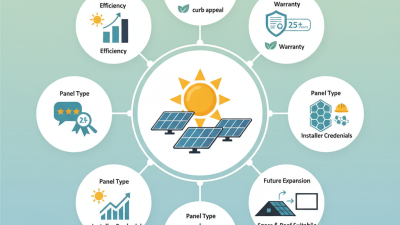
Compare rated power first, but do not stop there. Check efficiency, because higher efficiency produces more electricity from limited roof space. A panel with 22% efficiency may suit a small roof better than a cheaper 20% model. Review the temperature coefficient too. Lower losses in hot weather matter in warm regions.

Look closely at the degradation warranty. Many panels promise more than 80% output after 25 or 30 years, but the exact annual loss differs. Confirm product warranty length, testing certificates, fire rating, dimensions, and weight. These details affect installation safety and shipping costs. Also check whether the panel matches your inverter’s voltage and current range. I once focused only on wattage. That was a mistake. The panel fit the roof, but its current exceeded the system design. Ask for an independent inspection report and a sample datasheet before paying. Small wording differences can hide important limits.

How Much Do Top Chinese Solar Panels for Tesla Cost

Top Chinese solar panels for an electric vehicle home-charging system usually cost about $0.25 to $0.45 per watt. A 6-kilowatt panel set may therefore cost $1,500 to $2,700 before shipping and installation. These figures come from recent distributor quotations and can change by region, order size, and certification requirements.

The complete residential system costs much more. In many markets, a 6-kilowatt installation reaches $9,000 to $18,000 before local incentives. This price may include a hybrid inverter, mounting rails, wiring, labor, permits, and monitoring equipment. A battery can add another $5,000 to $12,000. For daily vehicle charging, south-facing panels and a shaded-free roof matter more than impressive marketing claims. Measure the roof carefully.

Quality involves more than efficiency. Look for independent testing, a clear product warranty, low temperature coefficients, and documented factory audits. A panel rated above 22 percent efficiency can produce more energy in limited roof space, but it may not deliver the quickest payback. My estimate can be wrong when labor or grid rules change. I would compare at least three written quotations, including replacement terms and shipping damage procedures. Premium equipment is not automatically the most practical choice.

Additional Costs for Inverters, Batteries, Shipping, and Installation

High-quality solar panels sourced from China often cost about $0.20 to $0.45 per watt before delivery. A 6-kilowatt system may therefore start near $1,200 for panels alone. However, the panel quote is only one part of the investment.

An inverter commonly adds $800 to $2,000, depending on capacity and monitoring features. Battery storage can cost $3,000 to $10,000 for a practical home system. Usable capacity matters more than the advertised battery size. Shipping may add $600 to $2,500, especially for small orders or remote destinations. Export packaging protects equipment, but increases freight volume. Local taxes may apply.

Installation often costs $2,000 to $6,000. Roof complexity, wiring distance, permits, and electrical upgrades can change that figure quickly. For a typical 6-kilowatt installation with one battery, a realistic total may reach $12,000 to $25,000. An installer should inspect the roof and main electrical panel before quoting. Many budgets overlook labor and permit fees. That mistake is expensive. A lower equipment price can also bring weaker documentation, slower support, or replacement delays. Request itemized invoices, test reports, warranty terms, and delivery insurance. Prices vary by country, season, and exchange rate, so online estimates need local verification.

China Top Tesla Solar Panels Cost How Much? - Additional Costs for Inverters, Batteries, Shipping, and Installation

Cost Category Typical Cost Basis Typical Price Range Estimated Cost for a 6 kW System Important Cost Factors
Solar panels Panel purchase price before shipping, taxes, and installation $0.18–$0.40 per watt $1,080–$2,400 Power output, efficiency, order quantity, warranty terms, certifications, and destination market
Inverter Grid-tied, hybrid, or microinverter equipment $0.15–$0.35 per watt $900–$2,100 System architecture, backup capability, monitoring, voltage requirements, and local electrical standards
Mounting and balance-of-system hardware Racking, rails, clamps, wiring, disconnects, fuses, and combiner equipment $0.20–$0.45 per watt $1,200–$2,700 Roof type, wind and snow loads, roof height, array layout, and cable distances
International shipping Ocean freight, export documentation, insurance, port handling, and inland delivery $1,500–$4,000 per shipment Approximately $250–$800 allocated to a 6 kW order Shipping route, container utilization, fuel rates, port charges, residential delivery, and seasonal demand
Import duties and customs charges Customs processing, tariffs, brokerage, taxes, and destination-specific trade measures Variable; commonly 0%–50%+ of declared equipment value Approximately $0–$2,500+ Country of delivery, product classification, origin rules, exemptions, and current trade policy
Professional installation labor Mechanical installation, electrical work, testing, and commissioning $0.75–$1.50 per watt $4,500–$9,000 Local labor rates, roof complexity, electrical upgrades, access, and system size
Permits, design, and inspections Engineering plans, permit applications, utility review, and final inspection $500–$2,000 per project $500–$2,000 Municipality, utility company, structural requirements, and interconnection rules
Battery storage Installed lithium-based storage system with approximately 10–15 kWh usable capacity $700–$1,200 per usable kWh installed $7,000–$18,000 Usable capacity, backup loads, battery chemistry, enclosure, additional controls, and electrical work
Main-panel or service upgrade Electrical panel replacement, service upgrade, or load-management equipment $1,500–$5,000 per project $1,500–$5,000 when required Existing panel capacity, utility requirements, service size, and required trenching
Estimated total before incentives Imported 6 kW residential system without battery Approximately $2.00–$4.50 per watt $12,000–$27,000 Excludes variable tariffs, major roof repairs, financing charges, and government incentives
Estimated total with battery Imported 6 kW residential system plus 10–15 kWh of storage Approximately $19,000–$45,000 $19,000–$45,000 Battery capacity, backup design, import charges, installation complexity, and local permitting

Notes: All figures are broad 2025–2026 planning estimates in U.S. dollars for a typical residential project. Actual prices vary by country, project size, shipping destination, applicable duties, roof condition, labor market, permitting requirements, and available incentives. The figures exclude financing costs and tax credits.

How to Choose a Reliable Chinese Solar Panel Supplier

China Top Tesla Solar Panels Cost How Much?

A 550-watt solar panel from China may cost about US$55–110 at factory level. Prices change with silicon costs, order volume, certification, and shipping. Retail prices can be much higher. IRENA reported a global utility-scale solar PV cost of US$0.044 per kilowatt-hour in 2023. This figure shows system economics, not a panel’s invoice price. It also reminds buyers to compare lifetime value, not only the first quotation.

Choosing a reliable Chinese supplier requires evidence. Ask for IEC 61215 and IEC 61730 test reports from an accredited laboratory. Check the factory’s production capacity, quality-control records, warranty terms, and export history. The IEA’s Renewables 2024 report expects China to provide nearly 60% of global renewable capacity additions through 2030. Large production does not automatically mean consistent quality. A low price can still hide weaker materials, delayed delivery, or limited after-sales support.

Tips: Request a recent product datasheet and a sample before ordering. Verify the legal company name and manufacturing address. Compare the module’s temperature coefficient, annual degradation rate, and mechanical-load rating. Use an independent inspection before shipment. Do not rely on polished certificates alone. I have seen sourcing decisions become too spreadsheet-focused; real performance also depends on packaging, installation, and climate. That part deserves more attention.