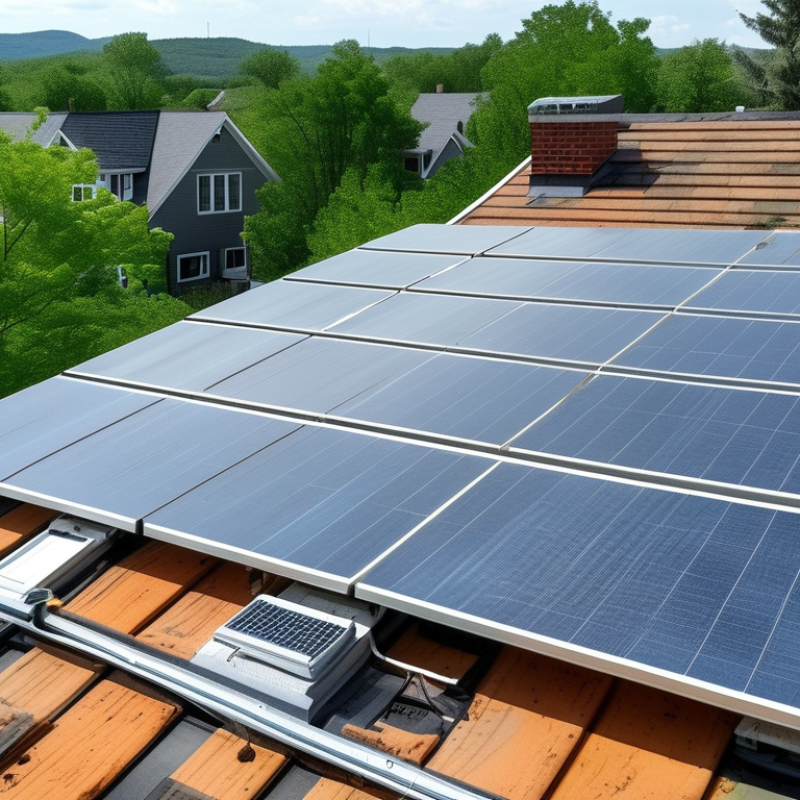
A “free roof replacement with solar panels” sounds simple, but the phrase needs careful examination. In most cases, the roof is not genuinely free. Instead, a solar company may include roof work within a long-term power purchase agreement, solar loan, lease, or other financing arrangement. The total cost can appear through monthly payments, escalators, equipment charges, or contract terms.
Amory Lovins, a respected energy-efficiency expert, has said, “The cheapest energy is the energy you don’t use.” That principle matters here. A new roof should protect the home before solar panels are installed. Inspect the decking, flashing, attic ventilation, shingles, and drainage. Small defects can become expensive beneath a solar array. Very expensive.
Eligibility varies by roof age, location, income, credit profile, utility rules, and program funding. Some assistance may come from tax incentives, local grants, manufacturer promotions, or nonprofit programs. However, these benefits rarely cover every roofing expense. A trustworthy installer should provide separate roof and solar prices, written warranty details, production estimates, permits, and cancellation terms.
Ask who owns the panels. Confirm who pays for repairs. Check whether removing panels affects the roof warranty. Compare at least three detailed proposals, preferably from licensed contractors and certified solar professionals. This guide will explore realistic paths toward a free roof replacement with solar panels, while recognizing an uncomfortable truth: attractive savings claims can hide complicated obligations. Verify every promise before signing.
Solar panels may help cover a roof replacement, but “free” is rarely the full story. The savings usually come from combining incentives, lower electricity bills, and solar financing. Some homeowners may qualify for tax credits or local programs. Rules and eligibility can change, so verify details with an official government source.
A roof must be inspected before panels are installed. Damaged decking, leaks, or an aging roof can create expensive problems later. Replacing the roof and adding solar together may reduce duplicated labor costs. However, the solar loan may increase monthly payments. The energy savings might not cover everything. That depends on sunlight, electricity rates, roof size, and system performance. I have seen estimates look promising until maintenance and interest charges were included.
Tips: Ask for separate roof and solar estimates. Confirm the roof’s expected lifespan. Request written details about incentives, warranties, removal costs, and financing terms. Compare projected savings with your current utility bills. Avoid rushing because a salesperson promises “free” work. A licensed roofing professional and a qualified solar installer should inspect the property. Keep every document. Small omissions can become costly.
“free” roof replacement is rarely automatic. It usually depends on combining solar incentives with separate roofing assistance. Check your eligibility before signing a contract. Your roof may need an inspection, proof of ownership, recent income records, and current utility bills. Local energy offices, housing agencies, and nonprofit programs may offer grants, rebates, low-interest loans, or repair support. Rules differ by location.
Ask whether assistance covers the entire roof or only essential repairs. Solar incentives often support panels and related installation costs, but they may not pay for an old roof. A licensed roofing professional should document leaks, damaged decking, poor ventilation, and the roof’s remaining life. Keep dated photographs and written inspection reports. Details matter.
Speak with the relevant government office, not only a salesperson. Confirm income limits, property requirements, application deadlines, and approved contractor rules. Some programs require approval before work begins. Starting repairs too early can make you ineligible. That mistake is surprisingly common.
Request a written estimate with separate prices for roofing, electrical work, permits, and solar equipment. Ask who owns the incentives and who handles warranty claims. Do not accept promises of a completely free project without written evidence. The process can feel confusing. It also rewards careful checking. Reconsider the project if the roof is structurally unsafe or the proposed savings depend on uncertain future energy prices.
“How to Get a Free Roof Replacement With Solar Panels?” sounds appealing, but “free” needs careful inspection. Some solar providers may replace or repair a roof before installation, then recover the cost through a long-term agreement. This offer is not automatic. A contractor usually checks roof age, structure, leaks, ventilation, and remaining lifespan. Photograph damaged shingles and request a written roof assessment. Small details matter.
Solar ownership gives you the system directly, often through cash payment or a solar loan. You may receive available incentives and retain future energy savings, but you usually pay roof costs yourself. Financing spreads payments over time, though interest can increase the total price. A solar lease lets another company own the equipment. You pay a fixed monthly amount, and roof work may be included in some contracts. A power purchase agreement charges you for each unit of electricity produced. It may reduce upfront costs, but payments can change under contract terms. Read carefully.
Check removal and reinstallation fees before signing. Ask who handles leaks, roof damage, monitoring, insurance, and system transfer if you sell the home. A “free roof” may be bundled into a higher monthly payment. That is not necessarily bad, but it should be visible. Compare the full cost over the agreement period, not only the first month. Get an independent roofing inspection. Solar savings estimates can also be optimistic. Personally, I would treat vague promises as a warning, not a benefit.
| Comparison Factor | Solar Ownership (Cash Purchase) |
Solar Loan (Financed Ownership) |
Solar Lease | Power Purchase Agreement (PPA) |
|---|---|---|---|---|
| Basic structure | The homeowner buys the solar system and owns the equipment immediately. | The homeowner borrows money to purchase the system and owns it, subject to the loan agreement. | A third party owns the system, while the homeowner pays a fixed recurring lease charge. | A third party owns and operates the system; the homeowner pays for the electricity produced, usually per kilowatt-hour. |
| Typical upfront payment | Highest upfront cost because the full system price is paid before installation. A roof replacement may be purchased separately or bundled into the project. | Often a low or zero down payment is available, depending on credit, lender terms, and local market conditions. | Usually low or no upfront payment, although fees or initial payments may apply. | Usually low or no upfront payment, subject to contract terms and qualification requirements. |
| Who owns the solar equipment? | Homeowner | Homeowner | Solar provider or other system owner | Solar provider or other system owner |
| Who may claim available tax incentives? | Generally the homeowner, if eligible and if the system and installation meet applicable requirements. | Generally the homeowner, because the homeowner owns the system; eligibility depends on current law and personal tax circumstances. | Usually the system owner, not the homeowner, because the third party owns the equipment. | Usually the system owner, not the homeowner, because the third party owns the equipment. |
| Roof replacement before solar installation | Usually paid directly by the homeowner unless the installer provides a clearly priced roofing package. | May be included in the financed amount if the lender and contractor permit it; interest may apply to the additional roofing cost. | Some contracts may coordinate or include roof work, but it is not automatically free. The contract should state the exact scope and price. | Some providers may offer roof-work arrangements, but a “free roof” is not a standard feature. Confirm whether costs are included in the energy price or charged separately. |
| Roof replacement after solar installation | Homeowner normally pays for removal, storage, and reinstallation of the panels, in addition to roofing work. | Homeowner normally remains responsible for roof work and panel removal or reinstallation while the loan continues. | The system owner may handle or coordinate panel removal and reinstallation, but charges and limitations vary by contract. | The system owner may handle or coordinate panel removal and reinstallation, but the PPA should specify responsibility, timing, and fees. |
| Roof condition requirement | A structurally sound roof with sufficient remaining service life is normally required before installation. | The same roof condition requirements generally apply because the panels are installed on the homeowner’s property. | The provider commonly performs a roof assessment and may require repairs or replacement before installation. | The provider commonly performs a roof assessment and may require repairs or replacement before installation. |
| Payment duration | No solar loan term after purchase, although the homeowner may finance a separate roof replacement. | Common residential loan terms are approximately 5 to 25 years, depending on the lender and agreement. | Common contract terms are approximately 15 to 25 years. | Common contract terms are approximately 10 to 25 years. |
| Monthly solar payment | No required solar payment after the system is purchased, excluding maintenance, insurance, or other household costs. | Fixed or variable loan payment, plus any remaining utility bill and possible loan fees. | Fixed monthly lease payment, sometimes with an annual escalator stated in the agreement. | Payment varies with energy production and the contracted price per kilowatt-hour; an annual price escalator may apply. |
| Maintenance and equipment performance | Homeowner generally bears maintenance and repair responsibilities after applicable warranties. | Homeowner generally bears maintenance and repair responsibilities after applicable warranties. | The system owner commonly provides monitoring and maintenance under the lease terms. | The system owner commonly provides monitoring, maintenance, and production management under the PPA terms. |
| Potential home-sale impact | Owned systems may be transferred with the property or paid off before closing, subject to local valuation and buyer preferences. | The loan may need to be paid off, transferred, or otherwise addressed during the sale. | The buyer may need to qualify for or assume the lease, or the seller may face buyout or transfer requirements. | The buyer may need to qualify for or assume the PPA, or the seller may face contract-transfer or buyout requirements. |
| Best suited for | Homeowners with available capital who want maximum ownership benefits and no long-term solar contract. | Homeowners who want to own the system but prefer to spread the purchase cost over time. | Homeowners who prioritize predictable payments and outsourced maintenance over equipment ownership. | Homeowners who prefer paying for generated electricity rather than purchasing the system. |
| How “free roof replacement” claims should be evaluated | A roof is not free; its cost is normally paid upfront or through separate financing. | A roof may be included in the financed project, but the homeowner generally repays the added amount with possible interest. | Any roof benefit should be verified in writing, including material specifications, labor, permits, warranties, and panel-removal charges. | Compare the total contracted energy cost with and without roofing work; a roof cost may be recovered through the long-term agreement. |
| Important documents to review | System quote, equipment warranties, roof contract, installation warranty, utility-interconnection terms, and incentive eligibility. | Loan agreement, annual percentage rate, total repayment amount, prepayment terms, system warranties, and roofing scope. | Lease term, escalator, buyout schedule, production guarantee, maintenance obligations, roof provisions, and transfer rules. | Price per kilowatt-hour, escalator, estimated production, utility-bill assumptions, roof provisions, buyout terms, and transfer rules. |
A “free” roof replacement with solar panels usually involves incentives, financing, or contractor credits. It is rarely free in the literal sense. Start with an independent roof inspection before signing a solar contract. The inspector should document leaks, soft decking, flashing damage, and the roof’s remaining life. According to the U.S. Department of Energy, most residential photovoltaic systems operate for about 20 to 30 years. A roof nearing failure should not support a new solar array.
Coordinate the work in one written schedule. Replace damaged decking and install the roofing materials first. Then allow the roof surface to pass a final inspection before mounting panels. The National Roofing Contractors Association recommends careful flashing and penetration details around rooftop equipment. Small installation errors can create expensive leaks. Ask for separate prices for roofing, electrical work, permits, and panel removal. Transparency matters.
Read every incentive condition carefully. NREL’s 2024 residential photovoltaic cost benchmark estimates system pricing near $3.15 per watt before incentives, showing why “free” offers may shift costs into financing. Confirm who owns the panels, who pays for future removal, and whether the roof warranty covers solar penetrations. I would also request a moisture test after heavy rain. It feels excessive, but missed damage becomes harder to prove later. Some estimates look attractive until roof repairs, permitting, and interest appear.
A “free” roof replacement with solar panels rarely means zero cost. It usually means the expense is included in a lease, power agreement, or financing plan. Read the contract beside the roof estimate, not separately. Check who owns the panels, who pays for removal, and who handles damage during installation. Ask whether roof work is included before signing. Verbal promises are weak evidence.
The warranty should name the covered materials, labor, leaks, and workmanship. Look for exclusions involving storms, poor ventilation, structural movement, or homeowner alterations. A long warranty sounds impressive, but its transfer rules may reduce its value when you sell the property. Ask how claims are filed and how long repairs usually take. Keep inspection reports, photographs, permits, and payment records in one folder. Small details matter.
Maintenance duties can shift to you. You may need to clear debris, report leaks quickly, and maintain attic ventilation. Solar equipment may require monitoring, while the roof still needs periodic inspection. Request a written schedule and realistic service fees. Compare the agreement’s total cost over twenty years, including escalation clauses, insurance changes, taxes, removal, and replacement. I have seen homeowners focus on monthly savings and overlook end-of-term charges. That mistake is understandable, but expensive. A careful review with an independent roofing professional can expose gaps before the panels reach the roof.
Typical warranty and service time frames to review before signing a solar-roof contract.
These are common industry ranges, not guaranteed terms. Confirm who pays for roof removal, repairs, maintenance, inverter replacement, and future solar-panel removal in the written contract.